

The Trend Simulation Era
Your favourite band made it big with the help of hundreds of fake accounts. Does it matter?

Musician eliza mclamb dropped a certified banger a week ago with her investigative report on Chaotic Good Projects:

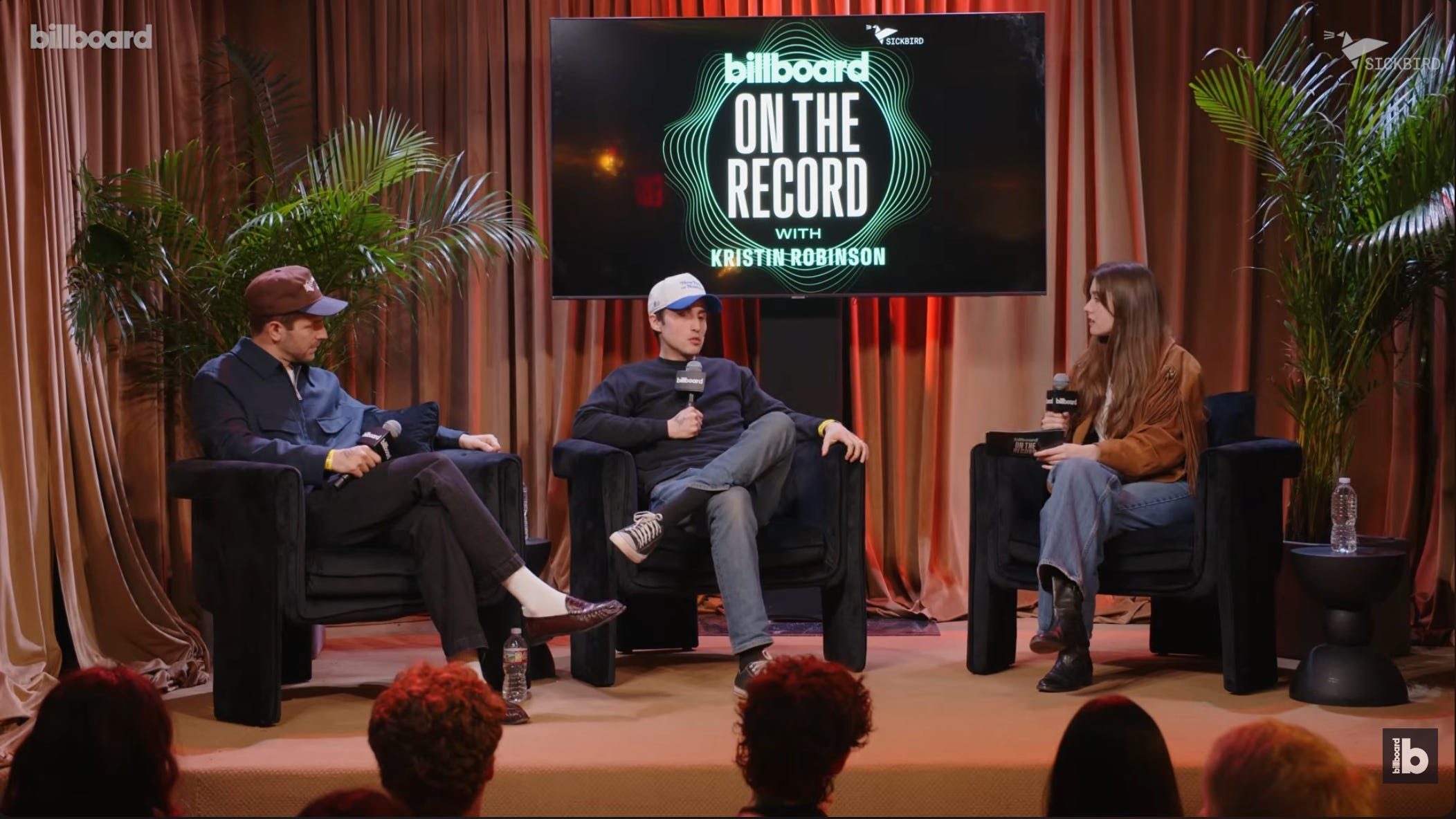
Her piece is essential reading and one of the best essays I’ve read on Substack. Mclamb uncovered a Billboard interview featuring the two co-founders of the aforementioned digital music marketing agency, Jesse Coren and Andrew Spelman, where they brazenly admitted to what they euphemized as “trend simulation,” all while wearing Cool Guy Costumes straight out of central casting.
When a client hires them, part of the plan is to make hundreds of fake accounts across social media platforms and have them post comments or make TikToks using a given song to falsely manufacture enough buzz around the band, so that real people start taking the ball and running with it:
“We have a large network of, you know, both employees and contractors and people in our network and yeah, a lot of phones.”
I already suspected that this kind of thing was happening and even rapped about it on “Bots” from my 2024 album Rollercoaster. I saw it as a major label phenomenon and it is true that some of the artists are those that you might expect to use a service like this: Justin Bieber, Dua Lipa, Travis Scott, Benson Boone, Alex Warren.
Sometimes, I’d look at a comment section, see a tidal wave of positive engagement and wonder, “Damn, this new artist is lit, how do they have so many fans already?” But Chaotic Good’s tacit admission of gaming the system to break artists and manipulate public opinion is still somewhat shocking:
“What we do at Chaotic Good with our management clients is: The second the SNL performance drops at midnight, you should post 100 times saying that was the best performance of the year.”
This is the new face of digital music marketing. Paying an influencer to dance to your song isn’t enough anymore. Buying fake streams will only get you so far and doesn’t translate to ticket sales.
To truly break through the algorithm and be one of the handful of new artists to reach the level of cultural saturation of Chaotic Good clients like Geese, Oklou, Mk.gee, Wet Leg and Dijon, the only method that actually works revolves around “controlling the discourse,” as Coren says in the Billboard interview. What once appeared to be a genuine groundswell of support for legitimately compelling new music has now been exposed as astroturfing.
This lays to rest the fairytale of making it big solely on the merits of one’s music. Organic discovery is a lie in today’s oversaturated internet landscape. There’s something freeing about knowing that certain folks really do have their thumbs on the scale. But it’s not just about traditional PR or major label access anymore. When I put out a video and get a couple thousand views, I at least know now that those few people are real. Perception is everything and generating social proof has now become big business.
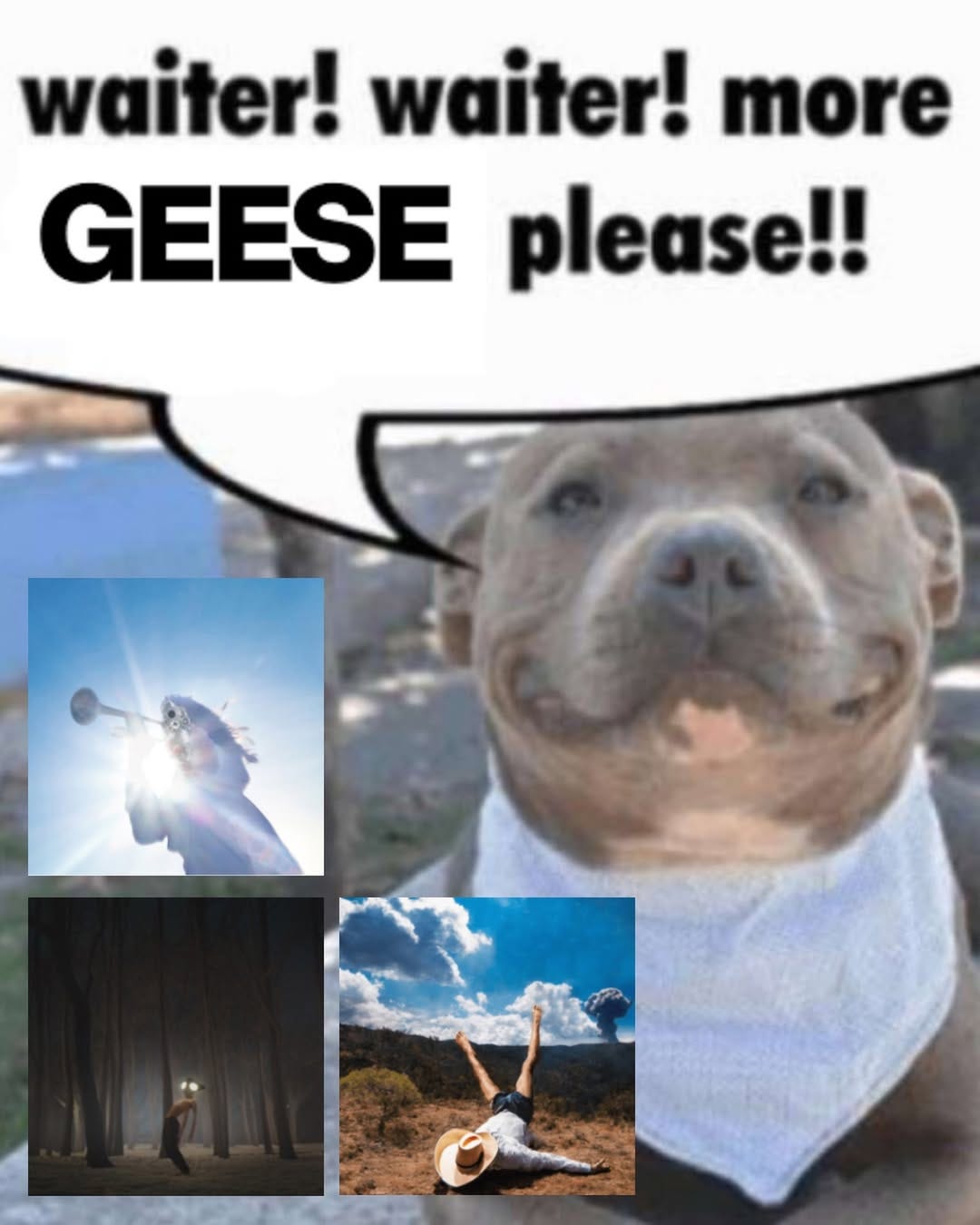
The “narrative campaign” for Geese’s Getting Killed in particular utilized the power of memes to help the band break through. I observed these early memes as an authentic symbol of the group’s growing fandom. It felt as if they were everywhere online, overbearingly so. In retrospect, much of it was not real. As we’ve seen with the Trump White House, memes have become genuine propaganda tools used by states as a form of digital warfare. These jokes are more impactful than they once initially seemed, functioning as strategic positioning.
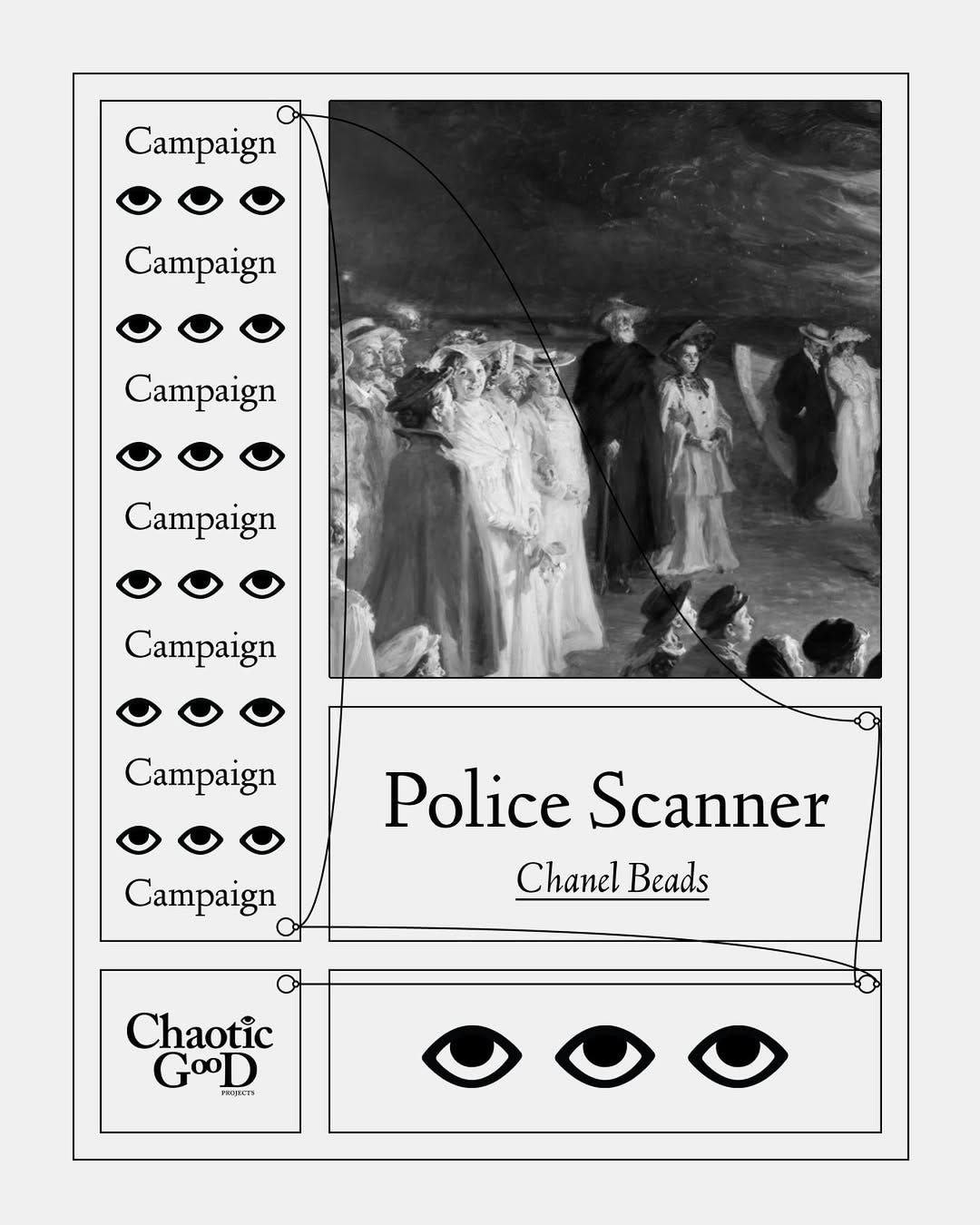
Like Mclamb with Geese, I too was a victim of Chaotic Good. I genuinely thought that I had come across “Police Scanner” by Chanel Beads on my own, but couldn’t exactly put my finger on how or where it happened. Perhaps I was scrolling along TikTok one day and it was playing in the background. I now know that it was likely seeded in a way where someone with my taste profile might stumble upon it:
I suspect that Chaotic Good wanted to be caught. Being the tech overlords that they are, they’ll probably put this newsletter post in a Powerpoint presentation at their office under a column marked “WINS.” For however many people are disgusted and horrified by their manipulative tactics, many artists out there will see the Billboard interview for exactly what it is: an ad for their services. Surely, they knew that their incendiary quotes would get picked up. Who wouldn’t want to go viral like Geese, by any means necessary?
As an independent artist currently promoting a new album on a shoestring budget, learning about the jet fuel that other acts have access to can be troubling. Many of these bands already had big labels, booking agents and PR at their disposal before they started using performance-enhancing droids to take them to the next level. But in my eyes, Chaotic Good is just another sad example of how the music industry is a shell game explicitly designed to redistribute wealth away from artists and back into the pockets of outside interlopers.
I also believe that, as people become more aware of Chaotic Good’s methods, this style of marketing will eventually stop working. People will gravitate to real tastemakers and writers who offer genuine human recommendations that aren’t paid for. One corrective could be to take a look at your feed and support the artists who make posts that don’t perform absurdly well. Struggling against the algorithm will now be seen as a sign of authenticity. Buy tickets to their shows, buy their merch, and be sure to leave them real human comments.
My new album Forager is out in JUST OVER TWO WEEKS on April 24th! You can RSVP for the virtual listening party on Bandcamp on April 22nd at 8 PM ET, I’ll be hanging in the chat and you can listen to the album from front to back early. I’m picking up the vinyl later today from the record plant, I can’t wait for y’all to see and hear what I’ve been working on!
“just another sad example of how the music industry is a shell game explicitly designed to redistribute wealth away from artists and back into the pockets of outside interlopers” 👍🏻
Very interesting (and fair!) take - like you say, this can't and won't last. And then something else will come along. Look forward to the new album!